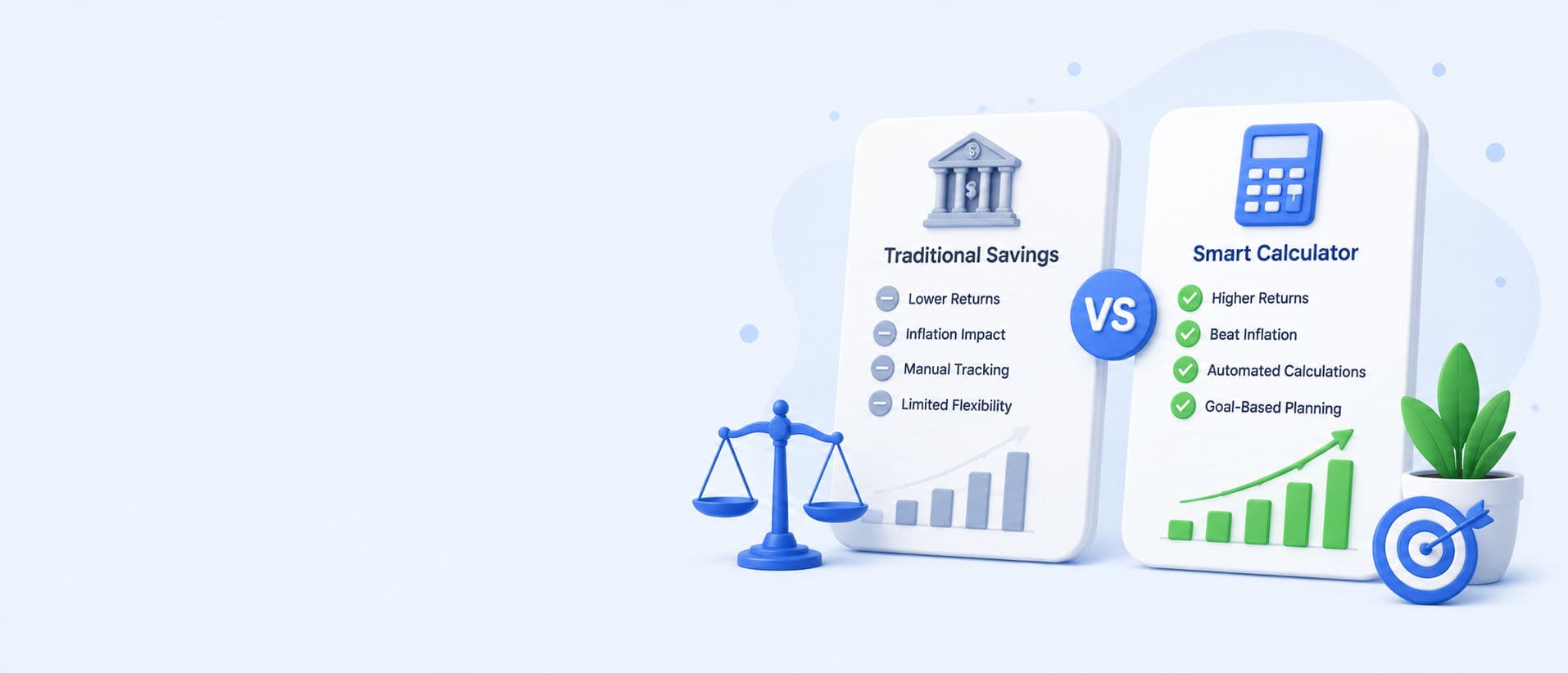
Loan Affordability vs Monthly Repayment Calculations
Compare loan affordability calculations with monthly repayment-focused calculations to understand different budgeting decisions.
Loan affordability and monthly repayment calculations answer related but different questions. One starts with your budget and works backward to a possible loan size, while the other starts with a loan size and works forward to the payment. This comparison helps you choose the right approach for your situation.
- 100% Free
- No Sign-Up Required
- Private & Secure
- Mobile Friendly
About Loan Affordability vs Monthly Repayment Calculations
Loan affordability and monthly repayment calculations answer related but different questions. One starts with your budget and works backward to a possible loan size, while the other starts with a loan size and works forward to the payment. This comparison helps you choose the right approach for your situation.
3
Comparisons
5
Key Factors
Instant
Results
100%
Free to Use
Affordability estimate vs monthly repayment estimate
This scenario compares starting with your budget against starting with a target loan amount.
| Factor | Option A: Loan Affordability Calculation | Option B: Monthly Repayment Calculation | What It Means |
|---|---|---|---|
| Starting point | Your income, debts, expenses, rate, and term | A chosen loan amount, rate, and term | Choose based on whether you want to know what may fit your budget or what a specific loan would cost each month. |
| Main output | Estimated affordable loan amount | Estimated monthly payment | The best output depends on the decision you are trying to make. |
| Best use stage | Early budgeting and planning | Comparing specific loan offers or amounts | Affordability is more useful before selecting a loan size, while repayment is more useful once you have a target amount. |
| Sensitivity to living expenses | High | Low or not included | Affordability calculations directly reflect everyday budget pressure. |
| Sensitivity to chosen loan size | Indirect | Direct | Repayment tools are designed to test a specific borrowing amount. |
| Risk of overstating comfort | Lower when realistic expenses are used | Higher if payment is viewed without full budget context | A payment may look manageable in isolation but still strain the rest of the budget. |
Use an affordability calculation when you want a budget-first estimate. Use a monthly repayment calculation when you already know the approximate amount you may borrow.
Shorter term vs longer term affordability
This scenario compares how loan term changes the estimated amount you may be able to borrow.
| Factor | Option A: Shorter Loan Term | Option B: Longer Loan Term | What It Means |
|---|---|---|---|
| Monthly payment required for the same loan amount | Higher | Lower | Spreading repayment over more months reduces the payment needed for the same principal. |
| Estimated affordable loan amount for the same budget | Usually lower | Usually higher | A fixed monthly budget can support a larger balance when repayment is spread out longer. |
| Total interest paid over time | Usually lower | Usually higher | Paying faster often reduces the total interest cost, assuming the same rate structure. |
| Speed of debt payoff | Faster | Slower | Short terms reduce the time you carry the debt. |
| Monthly budget flexibility | Lower | Higher | Lower required payments may leave more room in the monthly budget. |
| Payment pressure if income drops | Higher | Lower | Higher required payments can be harder to maintain during budget stress. |
A longer term may increase the amount your budget can support, but a shorter term usually reduces total interest and repays debt faster.
Lower interest rate vs higher interest rate
This scenario compares the effect of rate changes on affordability using the same payment budget and loan term.
| Factor | Option A: Lower Interest Rate | Option B: Higher Interest Rate | What It Means |
|---|---|---|---|
| Affordable loan amount for the same payment | Higher | Lower | Less of each payment goes to interest, so more can support principal. |
| Total interest over the term | Lower | Higher | Lower rates reduce the borrowing cost over time. |
| Monthly payment needed for a fixed loan amount | Lower | Higher | A lower rate reduces the payment required to amortize the same balance. |
| Sensitivity to term length | Still important | Often more pronounced | Both rates interact with term, but higher rates can make long terms especially costly. |
| Budget stress | Usually lower | Usually higher | Lower monthly payment pressure can make a loan easier to fit into a budget. |
Lower rates generally improve both affordability and total cost, while higher rates reduce the loan amount supported by the same monthly budget.
Key Differences at a Glance
Loan affordability starts with your budget, while repayment calculations start with a chosen loan amount.
Living expenses directly affect affordability estimates but may not appear in a simple repayment calculator.
Longer terms usually increase budget-based borrowing capacity but can increase total interest.
Higher interest rates reduce the principal supported by the same monthly payment.
Existing debt payments can sharply limit affordability even when income is high.
How to Decide
Assumptions
- Comparisons assume standard fixed-payment amortizing loans.
- Rate examples are general and do not represent lender offers or approval rules.
- The best option can depend on budget stability, borrowing purpose, and tolerance for monthly payment pressure.
- Fees, charges, and product-specific terms are not included unless separately considered.
Related Comparisons
Frequently Asked Questions
What is the difference between loan affordability and monthly repayment calculators?
A loan affordability calculator estimates what loan size may fit your budget, while a monthly repayment calculator estimates the payment for a chosen loan amount.
Which calculator should I use first?
If you are starting with a budget, use affordability first. If you already know the approximate loan amount, use a repayment calculator.
Why does a longer term increase the affordable amount?
Because the same monthly payment is spread over more installments, which can support a larger principal balance.
Does a longer term always mean it is better?
Not necessarily. It may improve monthly affordability, but it can also increase total interest and extend the time in debt.
How do higher existing debts affect these comparisons?
They mainly reduce the amount available for a new loan in affordability calculations, even if repayment estimates for a chosen balance still look manageable.
Ready to calculate your result?
Try the calculator and compare options with your own inputs.